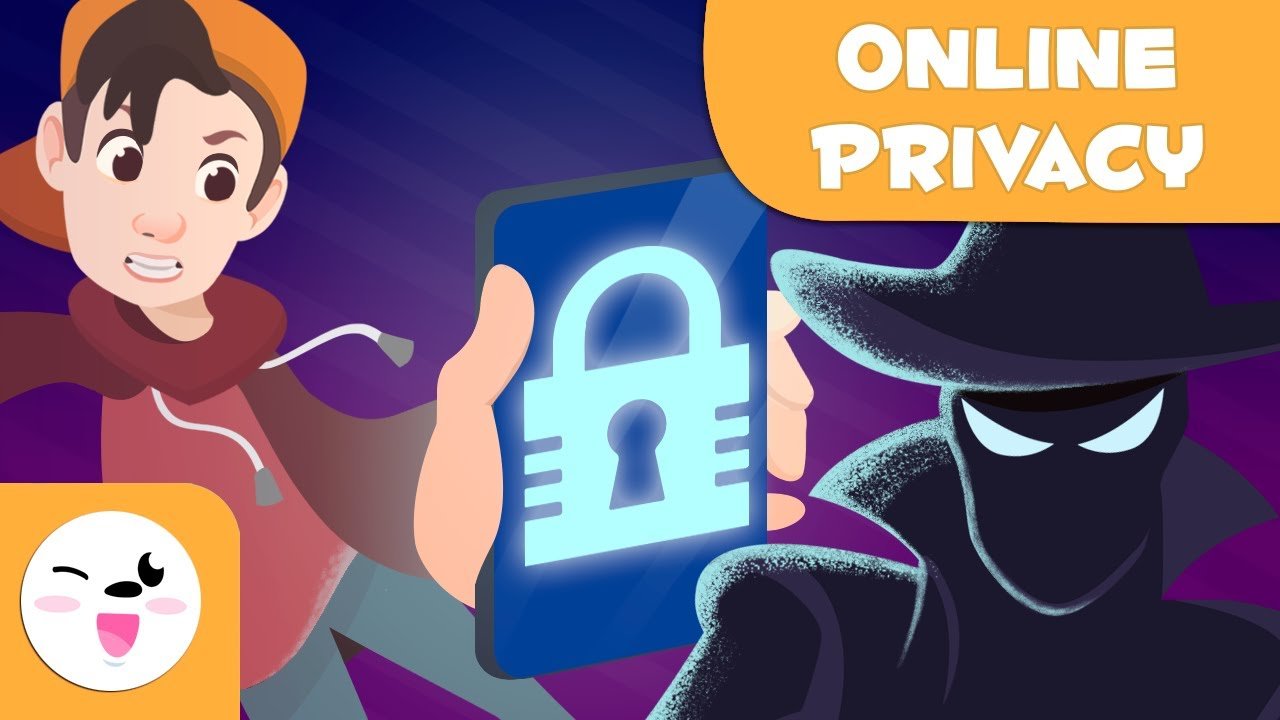
Let me ask you something. When was the last time you really thought about what your smartphone knows about you? Not in a paranoid way but just a honest moment of reflection. Your phone knows where you sleep and where you work and where you go on the weekends. It knows who you talk to and what you talk about. It knows what you search for in the middle of the night when you cannot sleep and what you look at when you think no one is watching. It knows your credit card numbers and your passwords and your private photos and your deepest curiosities. And all of that information is stored in a device that fits in your pocket and connects to the internet and can be lost or stolen or hacked or simply just watched by companies who have built entire business models around collecting and selling exactly this kind of data.
I am not saying this to scare you or to make you want to throw your phone into the nearest body of water. Smartphones are incredible tools that have transformed how we live and work and connect with each other. But they are tools that require understanding and respect. If you handed a power saw to someone without explaining how to use it safely you would expect them to get hurt eventually. The same is true for smartphones. We hand these powerful devices to children and adults alike without ever teaching the basic principles of digital safety and privacy. We assume that because the interface is friendly the technology must be safe. But the interface is designed to be friendly precisely so you will not think too hard about what is happening underneath. The companies that make your phone and the apps you use are not necessarily your enemies but they are also not your friends. They are businesses with their own interests and those interests do not always align with yours.
So let us talk about internet safety and privacy on smartphones in a way that is practical and actionable and maybe even a little empowering. You do not need to be a cybersecurity expert to protect yourself. You just need to understand a few key principles and develop some simple habits. Think of this as your owner’s manual for the digital age. The one that should have come in the box but did not.
Why Your Privacy Matters Even If You Have Nothing to Hide
There is a phrase you hear a lot when privacy comes up in conversation. I hear it at dinner parties and family gatherings and sometimes even from people who should know better. The phrase is I do not really care because I have nothing to hide. It sounds reasonable on the surface. If you are not doing anything wrong what do you have to worry about? But this argument misunderstands what privacy is actually for. Privacy is not about hiding bad behavior. Privacy is about maintaining boundaries and control over your own life. You close the bathroom door not because you are doing something shameful in there but because you deserve a moment of private space. You do not hand out copies of your personal diary to strangers on the street not because the diary contains evidence of crimes but because your thoughts are yours and you get to decide who reads them.
The nothing to hide argument also ignores the reality of how data is used and misused. You might not care that a company knows your location today but what about five years from now when that data is used to deny you insurance or employment or housing? You might not care that an app tracks your browsing history but what about when that history is leaked in a data breach and used to scam your elderly parents? The problem with giving away your data is that you lose control over where it goes and how it is used and you cannot get it back. Once information is out in the world it is out forever. You cannot unring that bell.
The Business Model of Free Apps
Let us talk about money because money explains almost everything about why your phone works the way it does. When you download an app for free you are not the customer. You are the product. This is the single most important concept to understand about modern technology. Companies like Google and Facebook and countless others offer their services for free because they make money by collecting information about you and using that information to sell advertising. The more they know about you the more they can charge advertisers to show you ads. Your data is the raw material of their business just like oil is the raw material of the energy business.
This does not mean that every free app is malicious or that you should never use them. But it does mean you should understand the transaction that is happening. You are trading your attention and your data for a service. The question is whether that trade is fair. Is the service valuable enough to justify the data you are giving up? Only you can answer that question. But you cannot answer it honestly if you do not know what data you are actually giving up. Most people have no idea. They click through the permissions and the terms of service without reading them because the documents are long and boring and written in legalese. That is intentional. The system is designed to make consent as easy as possible and understanding as hard as possible.
So here is a simple rule to live by. Be suspicious of anything that is free. Ask yourself how the company is making money. If you cannot figure it out the product is probably you. This does not mean you have to pay for every app you use but it does mean you should be more thoughtful about which free apps you trust with sensitive information. A free flashlight app does not need access to your contacts and your location and your photos. If it asks for those permissions something is wrong.
Permissions and Why They Matter
Speaking of permissions let us dig into that because app permissions are one of the most concrete ways you can protect your privacy right now. Every time you install an app on your phone it asks for access to various features and data. Your camera and your microphone and your contacts and your location and your photos and your Bluetooth and your motion sensors. Many people just click accept on all of these requests because they want to get to the app and they do not want to deal with the hassle. But those clicks add up to a detailed picture of your life.
Here is the thing you need to understand. Apps ask for permissions because they want to use those features. But they do not always need those features to function. A weather app needs your location to give you a local forecast. That makes sense. A calculator app does not need your location. If a calculator app asks for your location something weird is going on. Probably the app is collecting location data to sell to advertisers and the calculator function is just a cover. This actually happens. There are apps on the app stores right now that are essentially data harvesting tools disguised as useful utilities.
So get in the habit of paying attention when permission requests pop up. Ask yourself whether the permission makes sense for what the app does. If it does not make sense deny the permission. Most apps will still work fine. If they refuse to work without a permission that seems unnecessary that is a red flag. Uninstall the app and find an alternative. Both iPhone and Android now have privacy dashboards where you can see which apps have access to what and revoke permissions at any time. Go into your settings right now and take a look. You might be surprised at what you find. Apps you have not opened in months still have access to your location or your camera. Revoke that access. It takes five seconds and it makes a real difference.
Location Tracking and Your Physical Privacy
Location data is one of the most sensitive types of information your phone collects. Your location reveals where you live and where you work and where you go to school and where you worship and who you spend time with and what doctors you visit and what political meetings you attend and what protests you join. In the wrong hands location data can be used to stalk you or blackmail you or discriminate against you or simply sell you things based on where you have been.
And yet most people treat location permissions casually. They grant always access to apps that have no business knowing where they are at all times. Here is a better approach. Set location access to while using the app for almost everything. This means the app can only see your location when you have it open on your screen. As soon as you switch away the access stops. For navigation apps like Google Maps or Waze you might need to grant always access if you use them for turn by turn directions while driving. That is fine. But check which apps have always access right now. You will probably find social media apps and shopping apps and games that have no legitimate need to track your location in the background. Change them to while using or never.
There is another layer to location tracking that most people do not know about. Your phone also collects location data through Wi Fi networks and Bluetooth beacons even when GPS is turned off. Every time your phone scans for nearby networks it can figure out roughly where you are based on the networks it sees. This is how location services work even indoors where GPS signals are weak. It is also how companies can track you without your explicit permission. The best protection is to turn off Wi Fi and Bluetooth when you are not using them. Do not just swipe down and disconnect from the network because that keeps the radio on. Actually go into settings and toggle Wi Fi and Bluetooth off. This prevents your phone from constantly broadcasting its presence and allows you to move through the world with a little more anonymity.
Passwords and Authentication
Let us talk about passwords because I know you are probably tired of hearing about them but they still matter. The problem with passwords is that humans are bad at remembering random strings of characters so we reuse passwords across multiple sites or we use simple passwords that are easy to guess or we write them down on sticky notes attached to our monitors. All of these habits are dangerous because a breach on one site becomes a breach on every site where you used the same password.
The solution is a password manager. A password manager is an app that generates strong random passwords for every site and service you use and stores them in an encrypted vault. You only need to remember one master password to unlock the vault. That is it. The password manager handles the rest. It will even autofill your passwords when you log into sites so you do not have to type them. This is not just more secure. It is actually easier than trying to remember dozens of different passwords. There are many good password managers available including some that are free. Bitwarden and Apple’s iCloud Keychain and the password managers built into browsers all work well. Pick one and start using it today.
Beyond passwords you should enable two factor authentication on every account that supports it. Two factor authentication adds a second step to the login process usually a code sent to your phone or generated by an authenticator app. This means that even if someone steals your password they cannot get into your account without also having access to your phone. It is one of the most effective security measures available and it is free and easy to set up. Start with your most sensitive accounts like email and banking and social media and work your way down from there.
Biometrics and Your Body as Password
Modern smartphones offer biometric authentication like fingerprint scanning and facial recognition. These are convenient and generally more secure than a simple four digit passcode. But they come with their own considerations. Your fingerprints and your face are not secrets. You leave fingerprints on everything you touch and your face is visible to every camera you pass. You cannot change your fingerprints if they are compromised the way you can change a password. For most people this is an acceptable trade off because the convenience is worth it and the risk of someone actually stealing your biometric data is low. But for people at higher risk like journalists and activists and people in abusive relationships the equation might be different.
There is also the legal question. In many jurisdictions police can compel you to unlock your phone with your fingerprint or your face but they cannot compel you to provide your passcode because that would require you to testify against yourself. This is a complex area of law that varies by location but it is worth knowing that biometrics are not always optional. If you are concerned about this you might choose to use a strong passcode instead of biometrics or you might set up your phone so that pressing the side button five times disables biometric authentication and requires the passcode. This feature exists on both iPhone and Android and it is worth learning how to use it.
Public Wi Fi and the Risks of Free Internet
Public Wi Fi networks are everywhere. Coffee shops and airports and hotels and libraries all offer free internet access and it is tempting to connect and save your mobile data. But public Wi Fi networks are inherently insecure. Anyone else on the same network can potentially see what you are doing if the traffic is not encrypted. This includes passwords and emails and messages and photos. It is like having a conversation in a crowded room where everyone can listen.
The best protection is to use a virtual private network or VPN. A VPN encrypts all the traffic between your phone and the internet so that anyone on the same Wi Fi network sees only encrypted gibberish. There are many VPN services available and they are generally inexpensive. But be careful because not all VPNs are trustworthy. Some free VPNs actually collect and sell your data which defeats the purpose. Do some research and choose a reputable provider. If you do not want to use a VPN you should at least avoid doing anything sensitive on public Wi Fi. No banking and no shopping and no logging into important accounts. Save those activities for when you are on your mobile network or a trusted home connection.
There is another option that works well for many situations. Use your phone as a personal hotspot and connect your laptop to your phone’s mobile data. This is more secure than public Wi Fi because the connection is encrypted between your devices. It does use your mobile data allowance so it is not suitable for large downloads but for checking email and doing basic work it is a good alternative.
Software Updates and Why You Should Not Ignore Them
I know the notification pops up at the worst possible time. You are in the middle of something and your phone wants to restart for an update. You tap remind me later and then you forget about it for weeks or months. This is understandable but it is also risky. Software updates often include security patches that fix vulnerabilities that hackers have discovered. When you delay updates you leave those vulnerabilities open.
The reality is that most phone hacking is not sophisticated spycraft. It is automated attacks that scan for devices running outdated software with known security holes. Keeping your phone updated closes those holes and makes you a much harder target. Both iPhone and Android now offer automatic updates that install overnight while you sleep. Turn this feature on and let the updates happen in the background. You will never have to think about it again and your phone will stay protected.
The same principle applies to your apps. App updates also include security fixes. Enable automatic updates for your apps or at least check the app store periodically and install pending updates. It takes two minutes and it makes a real difference in your overall security posture.
Phishing and the Art of Digital Deception
Phishing is one of the oldest tricks in the book but it still works because humans are predictable. Phishing is when someone sends you a message that appears to be from a legitimate source like your bank or a shipping company or a government agency and tries to trick you into clicking a link or downloading an attachment or providing personal information. The messages are designed to create urgency and fear. Your account will be closed. Your package cannot be delivered. There has been suspicious activity. Click here immediately to fix it.
The problem is that phishing messages have gotten very sophisticated. They look exactly like real emails from real companies. The links go to websites that look exactly like the real websites. It is easy to be fooled and it happens to smart people every single day. The best defense is skepticism. If you get a message that creates urgency stop and think. Do not click the link. Go directly to the company’s website by typing the address into your browser or open their app and check your account there. If the message was real there will be a notification inside your account. If there is no notification it was probably a scam.
Be especially careful with text messages. Smishing is phishing via SMS and it is increasingly common because people tend to trust text messages more than email. Scammers send texts that appear to be from your bank or from Amazon or from the post office with links that lead to fake login pages. Same rule applies. Do not click. Go to the source directly.
Social Media and Oversharing
Social media is designed to make you share. The platforms reward sharing with likes and comments and engagement and that feels good. But oversharing can create privacy risks that you might not consider. When you post a photo from your vacation you are telling the world that your house is empty. When you check in at a restaurant you are broadcasting your location in real time. When you post about your children you are creating a digital footprint for them that they did not choose. When you share your birthday and your hometown and your mother’s maiden name you are giving away the answers to common security questions.
None of this means you should stop using social media. But it does mean you should think before you post. Consider who can see what you share. Review your privacy settings and make sure you are not broadcasting to the entire internet when you meant to share only with friends. Consider turning off location tagging for your posts. Consider whether that photo contains information you would rather keep private like your house number or your license plate or your work badge. Consider the long term implications of what you share because once something is on the internet it is effectively permanent even if you delete it later.
There is also the question of what the platforms themselves do with your data. Everything you post and like and comment on and even just scroll past is collected and analyzed to build a profile of who you are. That profile is used to target ads and to train algorithms and to influence what you see and think. You cannot opt out of this entirely if you use the platforms but you can limit what you share. Treat social media like a public space. Do not say anything there that you would not say in a crowded room full of strangers.
App Stores and the Risk of Malware
Both Apple’s App Store and Google Play Store have security measures in place to prevent malicious apps from being distributed. But neither system is perfect. Malicious apps slip through sometimes and even legitimate apps can become malicious if the developer is acquired or if the app is sold to a bad actor. There have been cases where popular apps suddenly started showing intrusive ads or collecting excessive data after changing ownership.
The safest approach is to be selective about what you install. Stick to well known apps from reputable developers. Read the reviews but read them carefully because fake reviews are common. Look at how many downloads the app has and how long it has been around. Be suspicious of apps that request excessive permissions or that seem too good to be true. A free game that looks like it cost millions to develop might be harvesting your data to make money.
The most important rule is never install apps from outside the official app store. On Android this means never enable installing from unknown sources. On iPhone this means never install enterprise certificates from untrusted sources. Sideloading apps bypasses the security checks that the app stores provide and is one of the most common ways people get malware on their phones. If an app is not in the official store there is usually a reason and that reason is rarely good.
Children and Smartphone Privacy
If you are a parent the privacy conversation gets even more complicated. Children are using smartphones at younger and younger ages and they do not have the judgment to protect themselves. They will click on anything and share anything and trust anyone. They do not understand that the friendly person in the game might be a stranger or that the photo they send to a friend might end up everywhere.
The responsibility falls on parents to teach and to protect. That means having conversations about online safety starting early and continuing often. It means setting ground rules about what apps can be installed and what information can be shared. It means using parental controls to limit what children can access and to monitor their activity without being overly intrusive. Both iPhone and Android have robust parental control features that let you manage screen time and app installation and content restrictions.
It also means modeling good behavior. Children learn from watching you. If you are glued to your phone at dinner and ignoring them while scrolling social media they will learn that phones are more important than people. If you share every moment of their lives online without their consent they will learn that privacy does not matter. Think carefully about what you post about your children. They cannot consent to having their photos shared with thousands of strangers. They might grow up to feel differently about that public footprint than you do now. Respect their future autonomy by being thoughtful about what you share today.
The Illusion of Anonymity
There is a dangerous belief that the internet is anonymous. That you can say and do anything online without consequences because no one knows who you really are. This belief is false. Very few things online are truly anonymous. Your internet service provider knows who you are. The websites you visit know your IP address. Your phone has unique identifiers that can track you across apps and sites. Even when you use incognito mode in your browser you are only hiding your history from other people who use your device. You are not hiding from websites or from your internet provider.
True anonymity requires specialized tools like the Tor browser and a level of technical sophistication that most people do not have. For everyday purposes you should assume that anything you do online can be traced back to you. This does not mean you should live in fear. It just means you should behave online the way you would behave in public. Do not say things you would not say to someone’s face. Do not post things you would not want your grandmother to see. Do not assume that a private message is truly private because screenshots exist and accounts get hacked and nothing digital is ever completely secure.
Data Brokers and the Shadow Industry
There is an entire industry that most people do not know exists. Data brokers are companies that collect information about you from public records and shopping habits and social media and loyalty cards and credit applications and hundreds of other sources. They compile this information into detailed profiles and sell those profiles to anyone willing to pay including marketers and insurance companies and employers and landlords and scammers.
You cannot completely stop data brokers from collecting information about you but you can make it harder and you can opt out of many of them. There are services that will help you opt out of data broker databases for a fee. But you can also do it yourself by searching for data broker opt out guides online and spending an afternoon working through the list. It is tedious but it is effective. Once you opt out your information will eventually be removed from those databases although it may take time and you may need to repeat the process periodically as new data brokers emerge.
Another approach is to give data brokers less to work with. Use a pseudonym when signing up for loyalty programs. Be careful what information you provide to retailers and websites. Use a separate email address for newsletters and shopping. The less data you put out there the less there is to collect and sell.
The Future of Privacy
Privacy is not a static concept. It is constantly evolving as technology changes and as society’s norms shift. What seemed private ten years ago is public now. What seems normal today might seem reckless in retrospect. The challenge is that technology moves faster than law and faster than social norms. By the time we figure out how to regulate a technology it has already evolved into something new.
The trends are not encouraging. More devices are collecting more data about more aspects of our lives. Smart speakers listen in our homes. Smart TVs watch what we watch. Smart appliances track how we use them. Smart cars know where we drive and how fast. All of this data is valuable and companies want it. The business model of the internet is based on surveillance and that is not changing anytime soon.
But there are also counter trends. People are becoming more aware of privacy issues and demanding better protections. Regulators in Europe and California and elsewhere are passing laws that give consumers more control over their data. Technology companies are adding privacy features partly because they believe in them and partly because they have to. The balance is shifting slowly.
For individuals the path forward is the same as it has always been. Stay informed and stay skeptical and stay engaged. Understand what you are giving up when you use technology and make conscious choices about what trade offs you are willing to accept. You do not have to opt out of the modern world to protect your privacy. You just have to be intentional about how you participate.
A Final Thought
I started this with a question about what your phone knows about you and I want to end with another question. What do you want your phone to know? Because ultimately that is the choice you get to make. Not a one time choice but an ongoing series of choices about what apps you install and what permissions you grant and what information you share and what habits you develop. Your phone is a tool and like any tool you can use it wisely or you can use it carelessly. The difference is understanding.